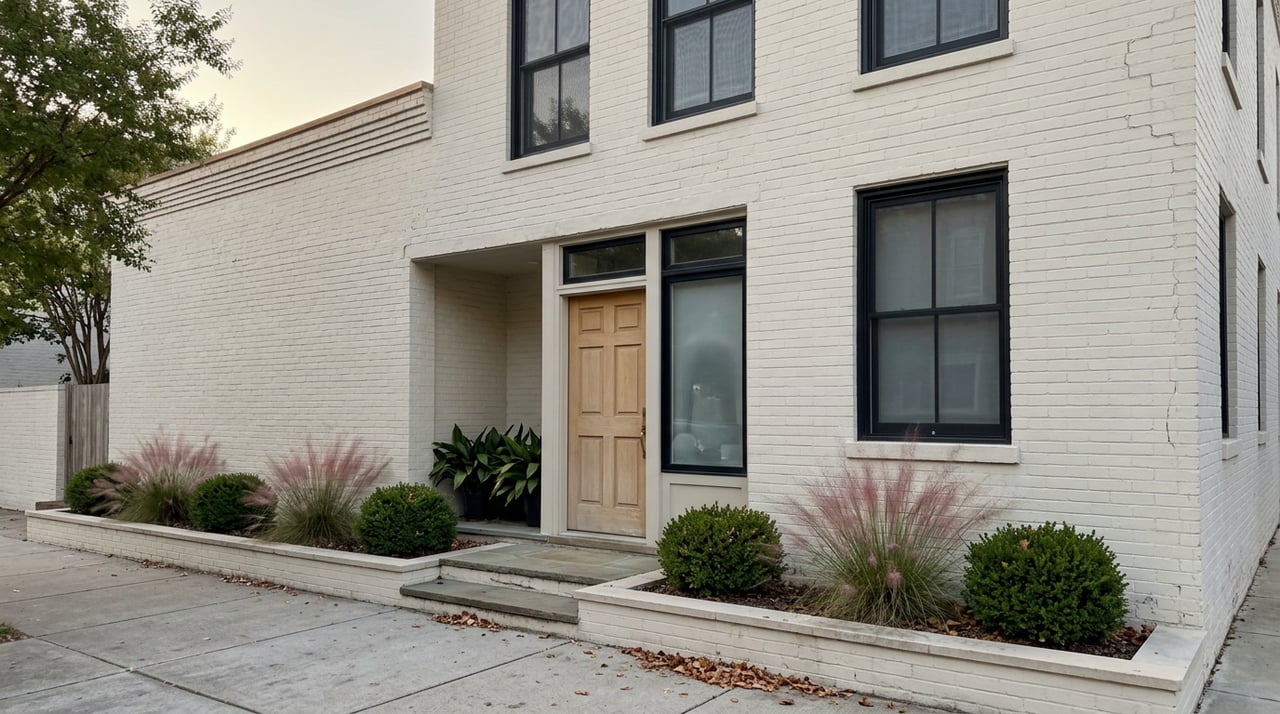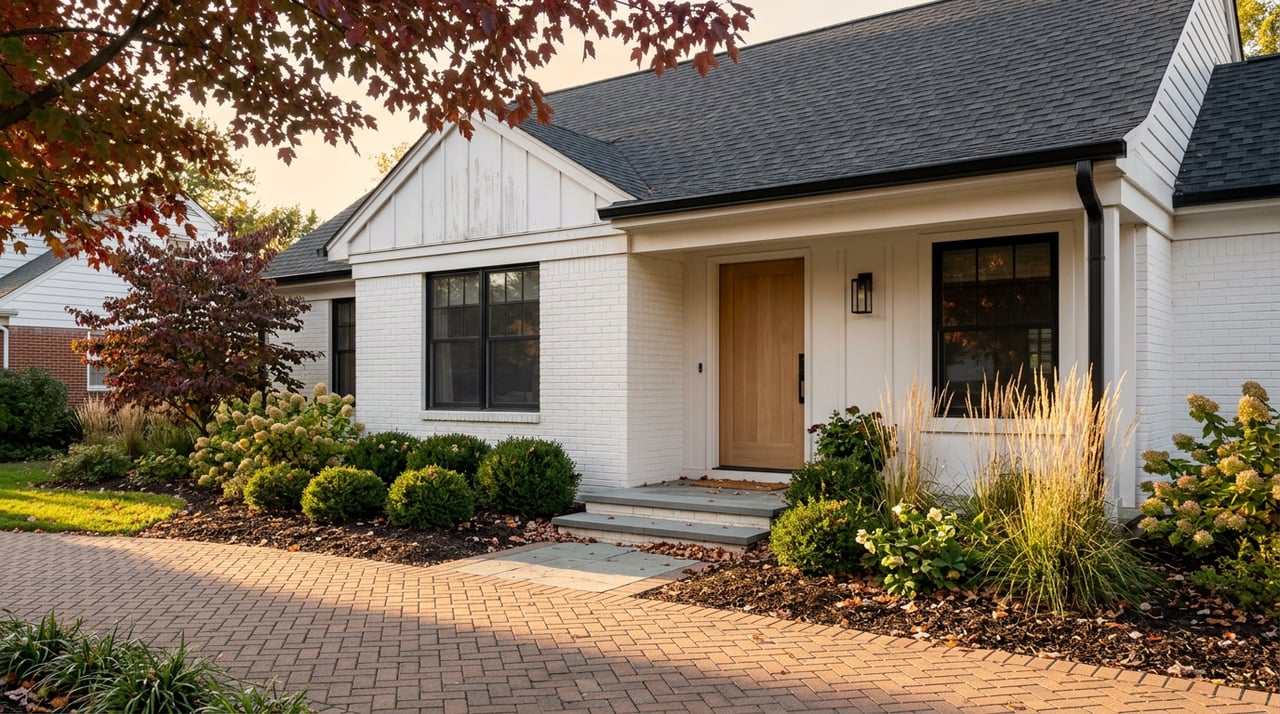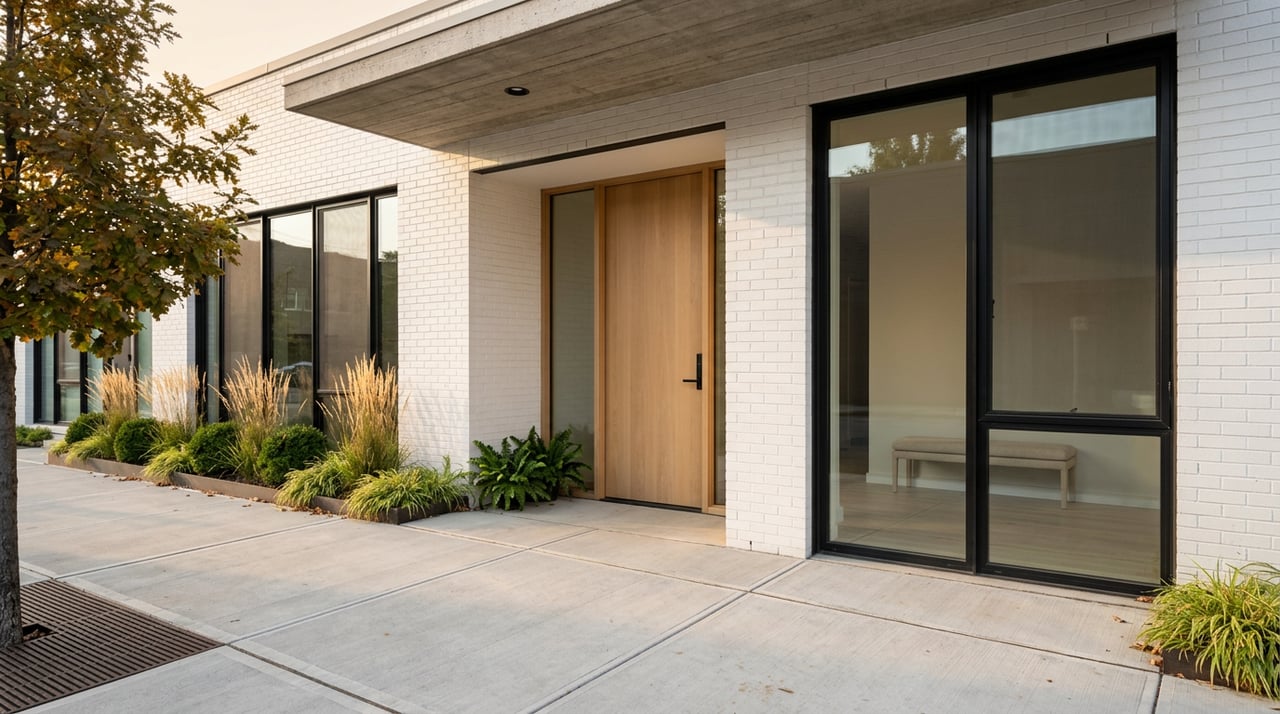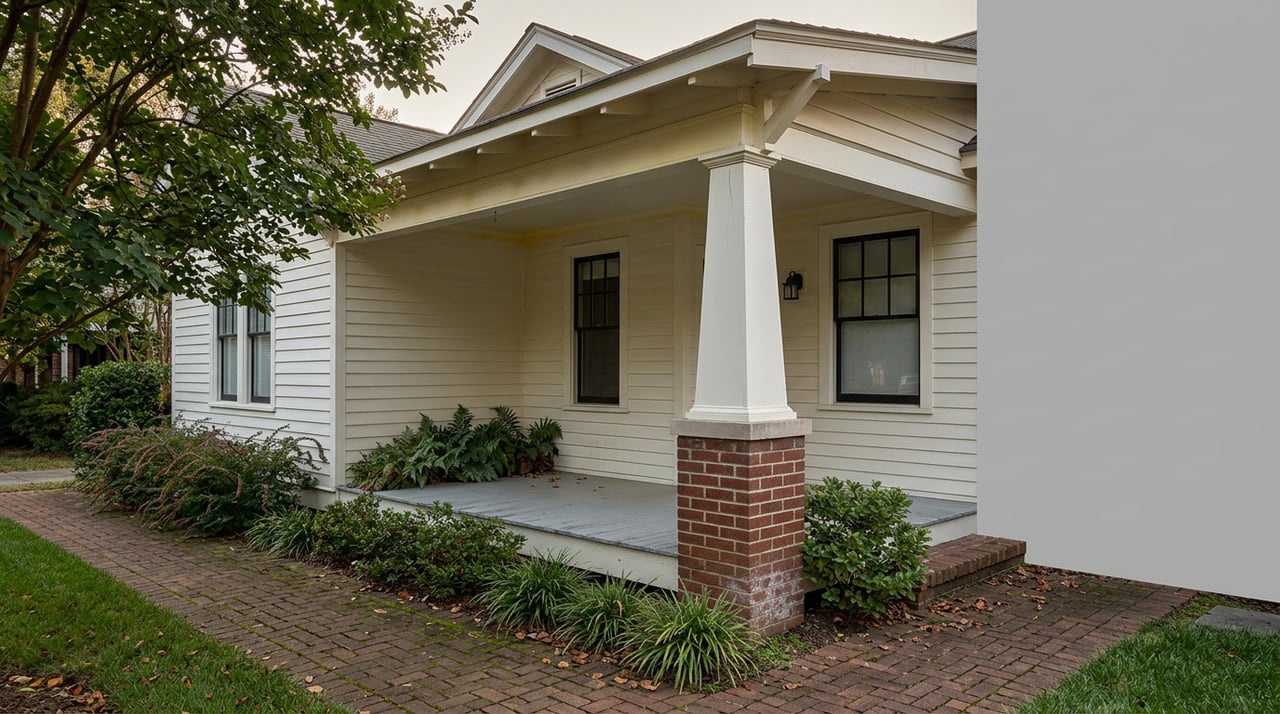
A buyer walks through a Sylvan Park bungalow that just went through a full renovation. Quartz counters, a fresh coat of white shaker cabinetry, refinished heart pine floors. Everything above the crawlspace looks brand new. What the listing photos do not show is what is often still down there: the same galvanized supply lines and cast iron drain pipe the house was built with in the 1920s or 1930s, untouched because the renovation budget went toward the parts buyers can see.
That gap between what a renovation shows and what it actually replaces is the first clue that Sylvan Park's real estate market is not one market. It is three, stacked on top of each other, and the median price you find in a quick search is quietly averaging across all three without telling you which one you are actually shopping in.
Two Numbers That Don't Agree, and Why That Matters
If you searched for Sylvan Park home prices recently, you likely ran into two very different figures, and both are correct for what they measure. Zip code 37209, which covers Sylvan Park along with neighboring pockets like Charlotte Park and The Nations, logged 853 home closings in 2025, the second highest total in Davidson County, with a median sales price near $619,498 according to Greater Nashville Realtors. That is a zip code number. It is measuring a much larger footprint than the walkable grid most people mean when they say Sylvan Park.
Inside that actual neighborhood boundary, a separate rolling 12-month MLS pull puts the median sale price at $1,041,000, with closed sales ranging from $375,000 up to $3,250,000. As of mid-August 2026, active listings averaged $1,582,206, with prices per square foot around $488 across homes averaging just over 3,100 square feet.
The lesson here is not that one figure is wrong. It is that Sylvan Park proper has decoupled from the zip code that contains it. If you are budgeting off a $619K headline, you are pricing a different, larger market. The neighborhood itself trades closer to seven figures, and has for a while.
Three Tiers, Not One Market
Once you're inside the real boundary, the next thing to understand is that "Sylvan Park" is really three separate price bands, each serving a different kind of buyer, with very little overlap between them.
| Tier | Typical Price Range | What You're Buying |
|---|---|---|
| Original, unrenovated | $375,000 to $700,000 | 1920s to 1940s Craftsman bungalow or cottage, largely as-built, including original systems |
| Fully renovated historic | $800,000 to $1.6 million | Same-era bungalow gutted and rebuilt with modern systems and finishes, sometimes with added square footage |
| New construction / teardown rebuild | Roughly $2 million to $2.75 million | Ground-up new build, often by a local builder, replacing an original cottage on the same lot |
Builders active in that top tier, including Regiment Construction, Native Construction, and TimoSix, have been delivering new infill on lots that held a 1930s cottage a year or two earlier. That top tier is also where most of the current MLS activity sits. The highest listed property in Sylvan Park as of this month was priced at $2,695,500, while the lowest active listing came in at $599,900, illustrating just how wide that spread actually is within a few blocks of each other.
Here is what a single median price cannot show you: these three tiers are not evenly populated. The entry-level, unrenovated tier is the smallest and shrinking one, and that is not simply a function of demand. It is a function of a specific local rule.
Why the Middle and Bottom Tiers Keep Shrinking
Nashville's broader teardown and infill wave has reached Sylvan Park in a visible way, with new construction sitting beside 1940s bungalows block by block. But parts of the neighborhood are not open to unlimited teardown activity. Metro ordinance records show overlays applied along corridors like Murphy Road, and portions of the neighborhood fall under a Neighborhood Conservation Overlay or the Park and Elkins design guidelines, both of which require preservation permits and design review before a home can be significantly altered or replaced.
That regulatory detail is easy to skip past, but it is doing real work on price. Restricting wholesale teardowns in these pockets means the supply of buildable, replace-it-with-new-construction lots is artificially capped. Every original cottage that sits inside a protected boundary cannot simply become a $2.5 million new build, which means it stays part of a shrinking pool of homes that already match the neighborhood's traditional scale.
The homes local brokers describe as sitting on "roughly four months of inventory" are not scarce because nobody wants them. They are scarce partly because a design overlay decided which lots get to become something else.
That scarcity premium explains why an unrenovated bungalow in Sylvan Park does not trade like an unrenovated bungalow anywhere else in the region. It is not simply old housing stock waiting for someone to finish the work. It is one of a limited number of lots where the work is even allowed to happen at scale, which is exactly why so few of them sit on the market at any given time.
What "Fully Renovated" Doesn't Always Promise
Even once you clear the overlay question and land on a renovated home in that middle tier, there is a second, less visible gap between what a listing shows and what a buyer actually gets.
A local plumbing contractor that works extensively in the neighborhood put it plainly: renovations typically address the plumbing buyers can see, meaning fixtures, exposed supply lines, and accessible drain sections, while leaving whatever runs beneath the crawlspace or behind a wall untouched. A house that has been through five or six owners over eighty years often has a patchwork of original galvanized supply lines, mid-century copper repairs, and modern PEX, installed in whatever combination each owner's contractor used at the time. The only way to know what a specific renovated Sylvan Park home actually has underneath its new floors is a plumbing-specific inspection, not just a general home inspection walkthrough.
That matters directly for anyone comparing a $1.2 million renovated bungalow to a $2.4 million new build and treating the difference as pure profit margin on cosmetic work. Persistent low water pressure, discolored water, or multiple documented failure points on old galvanized line are the signals a full repipe is worth budgeting for, and that is a five-figure number that a listing photo will never mention.
Reading the Three Tiers as a Buyer
If you are comparing Sylvan Park against other west side options, the practical takeaway is less about picking a tier and more about matching the tier to what you actually want to manage.
Buying original and unrenovated at $375,000 to $700,000 puts you closest to that shrinking, overlay-protected supply, but only if the specific lot falls in a boundary where future changes are limited and permitted rather than open. Buying fully renovated in the $800,000 to $1.6 million range buys visible modern finishes, but not necessarily modern infrastructure, which means a plumbing scope before closing is worth the cost regardless of how new the kitchen looks. Buying new construction at $2 million and up removes most of that infrastructure guesswork, at a price that reflects a scarce, design-review-limited supply of teardown-eligible lots rather than simply reflecting square footage.
None of these numbers move independently of each other. A tighter overlay boundary means fewer teardown candidates, which pushes new construction premiums higher, which in turn makes an already-renovated home in the middle tier look like the more reasonable buy, assuming its plumbing has actually been dealt with.
A Few Questions Worth Asking Before You Tour
Does the address fall inside a Neighborhood Conservation Overlay or Park and Elkins design boundary? This determines whether a future teardown or major addition is even an option, and it should shape how you value the lot itself versus the structure on it.
Has the plumbing actually been repiped, or just re-fixtured? Ask directly whether supply and drain lines were replaced beneath the crawlspace, not just at the visible fixtures, and request documentation if the seller has it.
What is an HPR-detached property? A handful of Sylvan Park's newer townhome and condo developments use horizontal property regime ownership on individually platted lots rather than a traditional fee-simple structure. It looks and lives like a detached single-family home, but the ownership paperwork and any association obligations are worth reviewing separately from a standard purchase.
Sylvan Park rewards buyers who understand which of its three markets they are actually shopping in, and penalizes the ones who budget off a single median number pulled from a search result. If you are weighing a move here against another west side neighborhood, or trying to figure out whether a specific renovated listing is priced fairly once the plumbing question is answered, Suzanne McMillan can walk the lot-specific overlay boundaries and inspection history with you before you write an offer. Request Your Personalized Home Valuation to start with the numbers that actually apply to the address you have in mind.