Thinking about living in Franklin while working in or around Nashville? You are not alone. For many professionals, Franklin offers a compelling mix of historic character, growing business activity, and a wider range of home styles than you may find in closer-in Nashville neighborhoods. If you are weighing commute time, lifestyle, and housing options, this guide will help you understand what Franklin offers and how to decide if it fits your next move. Let’s dive in.
Why Franklin Appeals to Professionals
Franklin is more than a bedroom community south of Nashville. The city is roughly 15 to 17 miles south of Nashville, and local planning documents describe it as a regional residential and employment center with continued growth projected through 2040. That matters if you want a place that supports both your home life and your work life.
Franklin’s long-range planning also points to corporate headquarters relocations and mixed-use growth along the Cool Springs and I-65 corridor. In practical terms, that gives you access to a market that feels established yet still evolving. For many relocating professionals, that balance is a big part of the draw.
Franklin’s Location and Access
Franklin’s location works well for professionals who need regular access to Nashville but do not want to live in the center of the city. According to the city and tourism sources, Franklin is accessible via I-65 and SR 840, which helps connect you to major employment hubs across the region.
That said, mileage and travel time are not always the same thing. Franklin’s Envision plan notes that much of the local workforce lives outside the city, which contributes to heavy commuter traffic and makes peak-hour drives less predictable.
What the Commute Really Feels Like
If you are relocating from out of state, it is easy to look at a map and assume a short distance means a simple commute. In Franklin, the reality can be more nuanced. State transportation planning for the Williamson County I-65 corridor points to increasing congestion and a high number of commuter trips between the area and Nashville.
For many professionals, that means your daily routine matters as much as your address. If you work standard office hours in Nashville, commute timing should be part of your home search from day one.
Driving Is Still the Default
Franklin is still largely a driving market. The city’s planning framework calls for a more complete transportation network over time, including bicycle, pedestrian, and transit connections, but today most residents still rely on a car for work and day-to-day mobility.
That can be a plus if you prefer more space and do not mind driving. It can be a tradeoff if you are coming from a highly walkable urban neighborhood where errands and entertainment are just steps away.
Bus Service Is Limited
If you are hoping to commute by bus, the option is there, but it is limited. WeGo Route 95 Spring Hill–Franklin runs on weekdays only, with four trips in each direction and no weekend or holiday service.
That schedule may work for some office commuters, but it will not fit every workday. If transit is a priority for your lifestyle, it is worth reviewing the actual route and timing before you commit to a location.
Downtown Franklin’s Everyday Appeal
One reason Franklin stands out is its downtown. The city describes Downtown Franklin as a historic district with commemorative brick sidewalks, Victorian architecture, and renovated historic buildings. It is also part of the National Register of Historic Places.
For many buyers, this creates a sense of place that feels distinct from newer suburban development. You get a downtown with real architectural depth, not just a shopping area designed to look old.
Easy for Local Errands
Downtown Franklin can also be practical for short visits. The city offers free parking, including two-hour on-street spaces and two garages with 300 spaces each. A city report also notes a free lunchtime shuttle pilot connecting Downtown Franklin and The Factory at Franklin, which adds convenience for local outings.
That does not change the broader car-first nature of the market, but it does make daily life a little easier if you enjoy running errands, meeting for lunch, or spending time downtown.
What Homes in Franklin Look Like
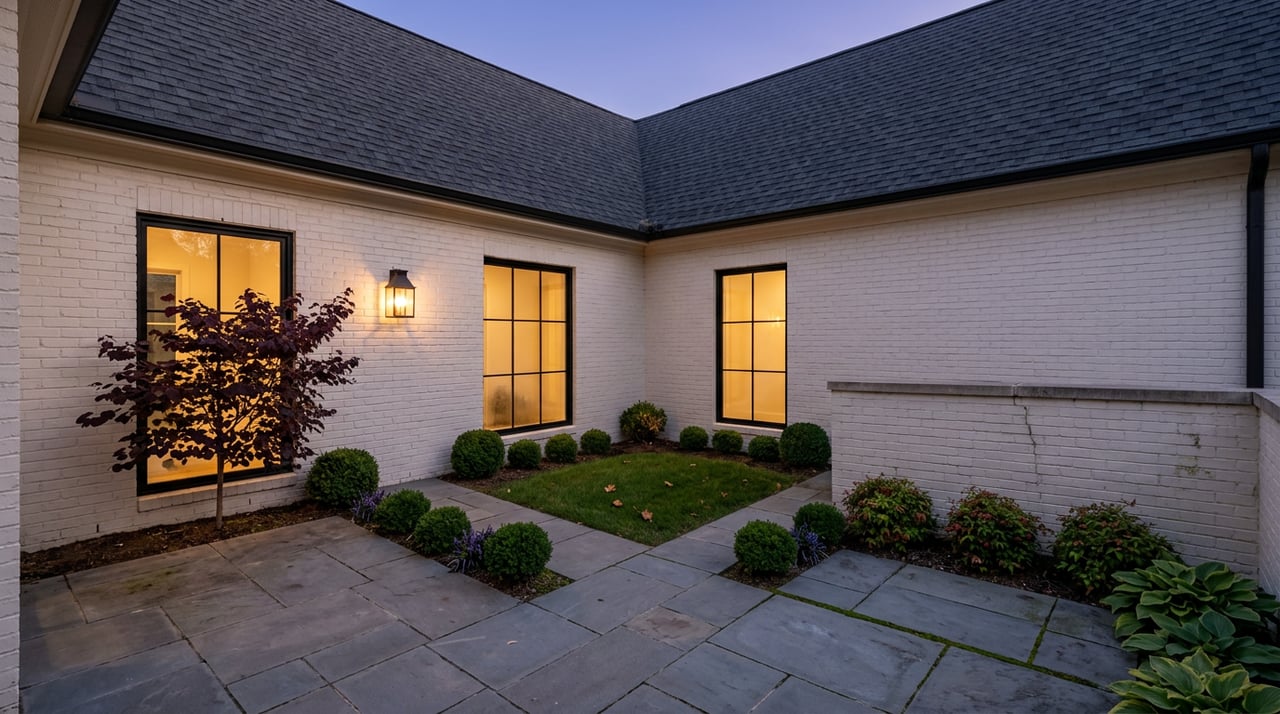
Franklin is not a one-style market. That is one of its biggest advantages for relocating professionals who want choices. Depending on where you look, you can find historic homes, larger-lot properties, subdivisions, townhomes, condominiums, apartments, and newer mixed-use communities.
According to the city’s 2025 development report, Franklin has 39,959 existing dwelling units. Of those, 54% are single-family and 30% are multifamily, with townhomes, condominiums, and apartments also playing a meaningful role in the housing mix.
Historic Homes and Architectural Character
If you are drawn to older architecture, Franklin offers unusual depth. The city’s design guidelines identify Federal, Greek Revival, Italianate, and Victorian architecture in the downtown district, along with brick storefronts, two- and three-story buildings, and tree-lined streetscapes.
The preservation footprint goes well beyond downtown. Franklin says it has five National Register historic districts and seven locally designated historic districts, with areas like the Franklin Road district adding even more variety through styles such as Folk Victorian, Neoclassical, and Bungalow architecture.
Newer Neighborhood Options
If historic homes are not your style, Franklin still gives you modern choices. The city’s planning documents highlight Westhaven as a compact, mixed-use, pedestrian-oriented neighborhood shaped by new urbanism principles and distinctive architecture.
This variety is important if you are relocating with a specific lifestyle in mind. Some buyers want a home with architectural history and a shorter drive to downtown Franklin. Others want a newer home, lower-maintenance living, or a neighborhood with a different streetscape and layout.
How Franklin Compares to Nashville Neighborhoods
If you are choosing between Franklin and neighborhoods closer to central Nashville, the decision often comes down to priorities. Nashville neighborhoods like The Gulch, 12South, Green Hills, Sylvan Park, and West Nashville each offer their own blend of walkability, dining, retail, and housing density, according to Visit Nashville’s neighborhood guides.
By comparison, Franklin often appeals to buyers who want more space, a stronger historic small-town identity, and a broader mix of detached-home options. That is not a rule for every buyer, but it is a useful framework when you are narrowing your search.
Choose Franklin if You Prioritize:
- More detached-home options
- Historic character and preserved architecture
- Access to both residential areas and employment centers
- A suburban setting with a defined downtown
- Broader housing variety across lifestyle types
Choose Closer-In Nashville if You Prioritize:
- A shorter commute into the urban core
- Higher-density condo or townhome living
- Greater walkability for restaurants and nightlife
- Less reliance on driving for daily activities
Lifestyle Factors Beyond the Commute
A relocation decision is rarely just about work. Daily quality of life matters, especially if you are moving with a partner, children, or long-term plans in mind.
Franklin offers a number of practical lifestyle advantages that many professionals value. The city’s 2025 development report lists 21 city parks and 1,012 acres of parkland, which adds meaningful outdoor access to everyday life.
For households comparing options across the region, school system scale may also be part of the conversation. Williamson County Schools says it serves about 42,000 students across 52 schools in the 2025–26 school year. If schools are part of your relocation criteria, it helps to review boundary information and current district resources as you evaluate specific homes.
A Smart Way to Search in Franklin
When you relocate to Franklin, it helps to think beyond the headline. Instead of asking only, “How far is it from Nashville?” ask more detailed questions about how you want to live.
Consider:
- How often you need to commute into Nashville
- Whether you want historic character or newer construction
- How important walkability is for your routine
- Whether you prefer a detached home, townhome, condo, or mixed-use setting
- How much local access you want to parks, downtown amenities, and work hubs
These questions can quickly narrow your search and save you time. They also help you focus on fit, not just price point or square footage.
Why Local Guidance Matters
Franklin can look like several different markets at once, which is why local guidance matters. A historic home near downtown, a newer neighborhood in a mixed-use setting, and a larger-lot property can all offer very different day-to-day experiences even within the same city.
If you are relocating from another market, it helps to have an advisor who can translate those differences clearly. That includes helping you weigh commute realities, neighborhood character, home style, and how each option supports the way you want to live.
If you are considering a move to Franklin or comparing it with Nashville-area neighborhoods, Suzanne McMillan can help you build a relocation plan around your priorities, your timeline, and the kind of home that truly fits your next chapter.
FAQs
Is Franklin a good place for Nashville-area professionals to live?
- Franklin can be a strong fit if you want access to Nashville along with more detached-home options, a historic downtown, and a growing employment base in the Cool Springs and I-65 corridor.
How far is Franklin from Nashville for a daily commute?
- Franklin is roughly 15 to 17 miles south of Nashville, but commute times can vary because the I-65 corridor experiences significant commuter traffic.
Does Franklin have public transit to downtown Nashville?
- Yes, WeGo Route 95 connects the Franklin area to downtown Nashville on weekdays, but service is limited to four trips in each direction and does not run on weekends or holidays.
What types of homes can you find in Franklin, Tennessee?
- Franklin offers a mix of historic homes, single-family houses, townhomes, condominiums, apartments, and newer mixed-use neighborhood options.
Is Downtown Franklin walkable for everyday use?
- Downtown Franklin is convenient for short errands and outings, with free parking, garages, sidewalks, and a historic street grid, though the broader Franklin market is still largely car-dependent.
How does Franklin compare with neighborhoods like The Gulch or 12South?
- Franklin generally offers more space, more detached-home choices, and a strong historic-town feel, while closer-in Nashville neighborhoods often appeal more to buyers who want higher walkability and a shorter commute to the city core.
Are there parks and community amenities in Franklin?
- Yes, the city’s 2025 development report lists 21 city parks and 1,012 acres of parkland, which can be an important quality-of-life factor for many relocating buyers.